
What is Mergers and Acqusitions?
The Abbreviation and Its Meaning in Investment Banking
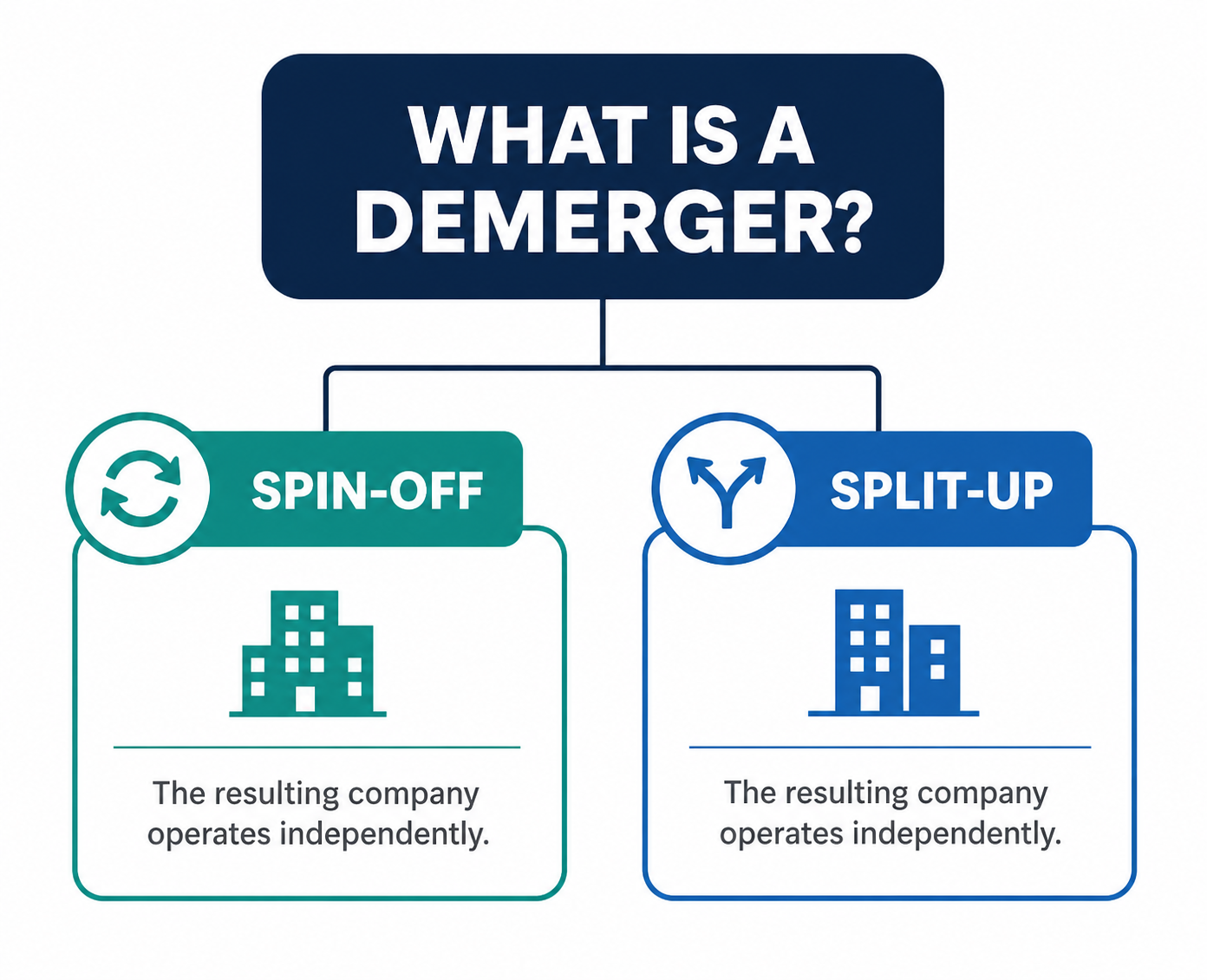
M&A stands for Mergers and Acquisitions. Within investment banks, the term encompasses the full suite of advisory services related to corporate combinations, divestitures, spin-offs, and related restructuring transactions. Bankers rarely draw rigid distinctions between “merger” and “acquisition” in client conversations; both fall under the M&A umbrella. The abbreviation appears on pitch books, engagement letters, fairness opinions, and tombstone advertisements that celebrate closed deals. League tables published by Refinitiv, Dealogic, and Bloomberg rank banks by the volume and value of M&A transactions they advise, making the acronym central to competitive positioning on Wall Street and in global financial centers.What Is a Merger from an Investment Banker’s Viewpoint?
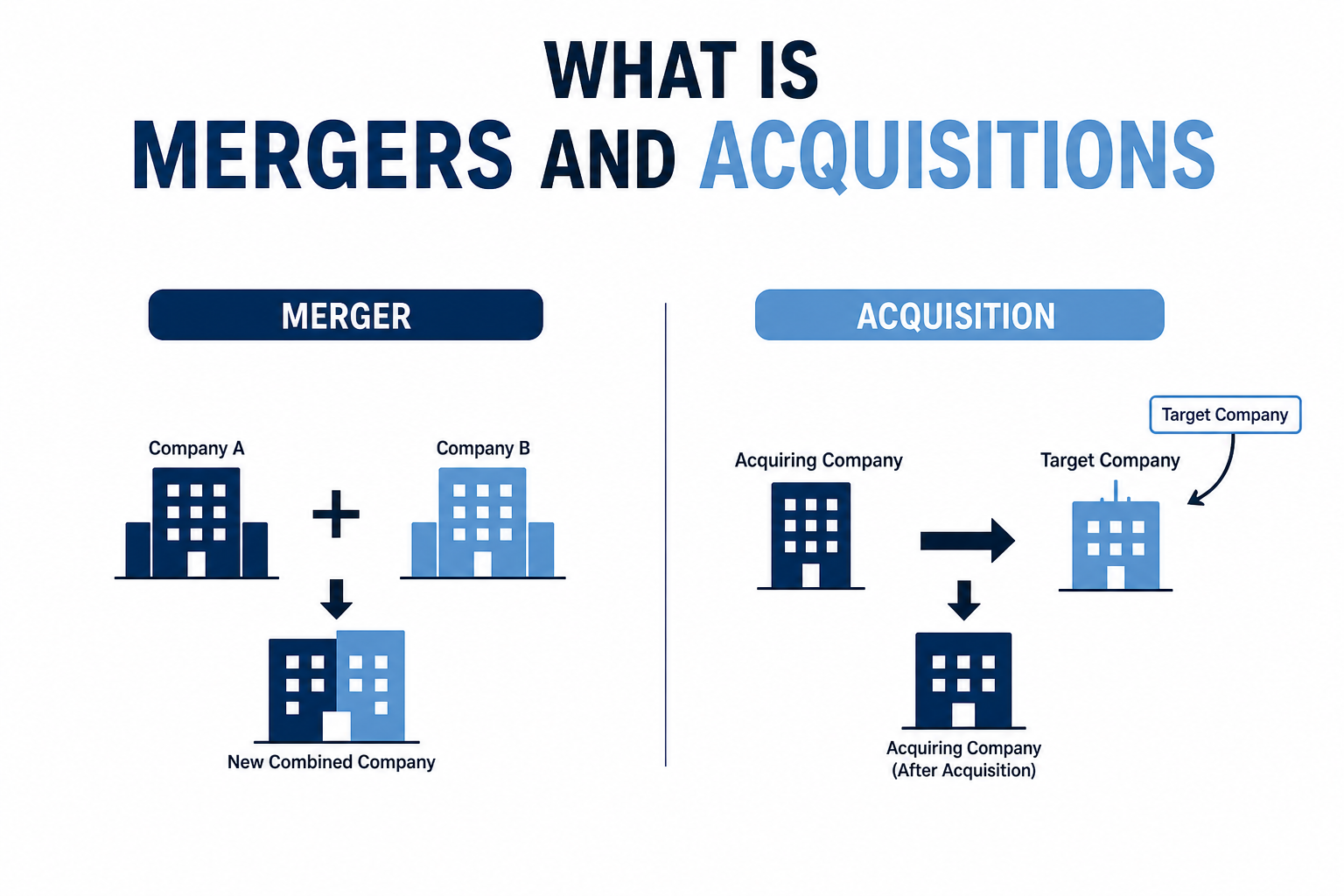
A merger is a transaction in which two companies combine to form a single new entity, typically through a stock-for-stock exchange or a mixture of cash and shares. Investment bankers treat true mergers of equals as relatively rare and complex assignments. They require careful modeling of exchange ratios, governance arrangements (board seats, management succession), and social issues such as who becomes CEO. Bankers prepare detailed accretion/dilution analyses, synergy estimates, and pro-forma financial statements to demonstrate that the combined company will create value for both sets of shareholders. Because neither side is clearly the “buyer,” negotiation dynamics differ from a classic acquisition, and the bank’s role often includes acting as a neutral facilitator while still protecting its client’s interests.
What Is an Acquisition?
An acquisition occurs when one company (the acquirer) purchases control of another (the target). This is the more common form of M&A work for investment banks. The bank may represent the buyer (buy-side mandate) or the seller (sell-side mandate). On the buy side, bankers help identify targets, run valuation analyses, structure financing (often coordinating with the bank’s debt capital markets or leveraged finance teams), and manage the bidding process. On the sell side, they prepare the company for sale, draft the confidential information memorandum, run a controlled auction, solicit indications of interest, and negotiate the highest and best offer. Acquisitions can be friendly or hostile; in hostile situations, banks advise on defense strategies, white-knight searches, or poison-pill implementations.
Distinctions That Matter to Bankers
While the legal and accounting distinctions between mergers and acquisitions are real, investment bankers focus on practical differences that affect process, fees, and execution risk. Acquisitions usually involve a clear control premium, which must be justified to the acquirer’s board and shareholders. Mergers of equals often feature lower or zero premiums but more intricate governance negotiations. Bankers also care about deal structure—cash versus stock, contingent value rights, earn-outs, and collars—because these elements influence valuation, risk allocation, and the probability of closing. Regulatory approval timelines, financing conditions, and termination fees are additional variables that shape the advice given to clients.
The M&A Department Inside an Investment Bank
Virtually every major investment bank maintains a dedicated M&A group, often organized by industry coverage (technology, healthcare, industrials, financial institutions, etc.) and by product expertise. Senior managing directors originate relationships and win mandates; vice presidents and associates build the models, prepare the books, and manage due diligence; analysts handle the heavy lifting of financial analysis and presentation materials. The group works closely with capital markets, leveraged finance, equity research, and industry coverage bankers. Success is measured by announced and completed deal volume, fees earned (typically a percentage of transaction value, with higher percentages on smaller deals), and the quality of relationships that generate repeat business.Boutique advisory firms have carved out significant market share by offering independent advice free from the potential conflicts that can arise when a full-service bank also provides financing or trading services. Whether bulge-bracket or boutique, the M&A department’s core output is advice: strategic rationale, valuation, process design, negotiation support, and fairness opinions that boards rely upon when approving transactions.
How M&A Fits into the Broader Economy from a Banking Lens
Investment bankers view M&A as a critical mechanism for reallocating capital and corporate control. When a company is undervalued, under-managed, or strategically stranded, an acquisition can transfer those assets to owners who can deploy them more productively. Waves of M&A activity often coincide with periods of abundant liquidity, high equity valuations, low interest rates, and industry disruption. Banks intermediate this activity, earning fees while facilitating the movement of billions of dollars in equity and debt capital.From a macroeconomic standpoint, robust M&A markets signal confidence and support efficient resource allocation. They also create secondary effects that banks monitor closely: equity capital markets activity (secondary offerings to fund deals), debt issuance, and subsequent restructuring work if deals underperform. Regulatory scrutiny—antitrust reviews by the Department of Justice, Federal Trade Commission, European Commission, or other authorities, as well as national-security reviews—adds complexity and timeline risk that bankers must factor into every process.
The Investment Banking M&A Process
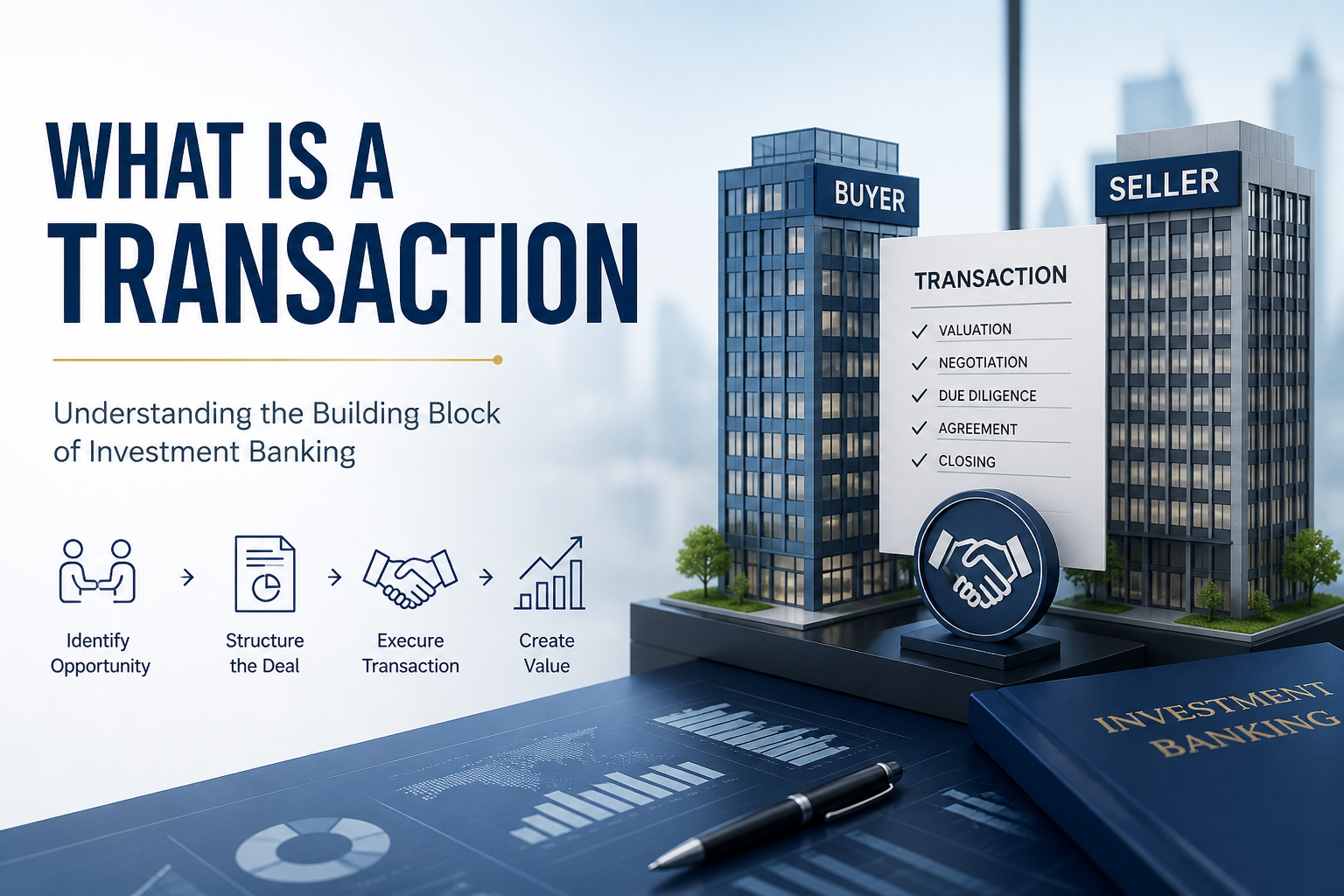
A typical sell-side process illustrates the banker’s role. After winning the mandate, the team prepares marketing materials, identifies and contacts potential buyers (strategic and financial), manages the flow of information under non-disclosure agreements, solicits preliminary bids, organizes management presentations and data-room due diligence, negotiates final offers, and supports the negotiation of the definitive agreement. Buy-side work is often more targeted: screening opportunities, approaching specific companies, and preparing the client to move quickly when a target becomes available. Throughout, bankers produce valuation materials using discounted cash flow, comparable company, precedent transaction, and leveraged buyout analyses. They stress-test synergies, model various financing structures, and advise on deal protections such as break-up fees and matching rights.Value Creation, Risks, and the Banker’s Perspective
Investment bankers are paid to help clients create or realize value. A well-executed transaction can deliver a control premium to selling shareholders, strategic advantages to buyers, and attractive returns to financial sponsors. Yet bankers are acutely aware that many deals fail to meet their original projections. Overpayment, cultural integration problems, and overestimated synergies remain perennial risks. Consequently, rigorous analysis, realistic assumptions, and clear communication with boards and management teams form the foundation of credible advice.Fees, while secondary to client outcomes in theory, matter in practice. Success fees are contingent on closing; opinion fees and retainer fees provide some income regardless of outcome. Reputation, however, is the longer-term currency. Banks that consistently deliver thoughtful advice and successful outcomes win the next mandate.
In essence, from the investment banking vantage point, mergers and acquisitions represent both a sophisticated advisory craft and a core engine of the firm’s revenue and prestige. Bankers translate corporate strategy into executable transactions, navigate complex negotiations and regulatory landscapes, and intermediate the transfer of corporate control that continually reshapes the competitive landscape of the global economy.
FAQ: Mergers and Acquisitions from an Investment Banking Perspective
1. What does M&A stand for in investment banking? M&A stands for Mergers and Acquisitions. It refers to the advisory product line through which investment banks help clients buy, sell, or combine companies, and it is a primary driver of league-table rankings and fee income.
2. How do investment banks get paid on M&A deals? Banks typically earn a success fee calculated as a percentage of the transaction value, often with higher percentages on smaller deals. Additional fees may include retainers, fairness-opinion fees, and financing-related compensation when the bank also provides capital.
3. What is the difference between a buy-side and a sell-side mandate? On a sell-side mandate the bank represents the company being sold and runs a process to maximize value and certainty of closing. On a buy-side mandate the bank advises the acquirer on identifying, valuing, financing, and negotiating the purchase of a target.
4. Why do investment banks prepare fairness opinions? A fairness opinion is an independent assessment, delivered by the bank, that the financial terms of a transaction are fair to the client’s shareholders from a financial point of view. Boards frequently request them as part of their fiduciary process and for legal protection.
5. How do market conditions affect M&A activity from a banker’s perspective? High equity valuations, low interest rates, and strong CEO confidence generally increase deal volume and fee opportunities. Conversely, market volatility, rising rates, or regulatory uncertainty can slow processes, reduce valuations, and make financing more difficult, directly affecting the pipeline and closing rates that banks experience.



What is Mergers and Acqusitions?
The Abbreviation and Its Meaning in Investment Banking
M&A stands for Mergers and Acquisitions. Within investment banks, the term encompasses the full suite of advisory services related to corporate combinations, divestitures, spin-offs, and related restructuring transactions. Bankers rarely draw rigid distinctions between “merger” and “acquisition” in client conversations; both fall under the M&A umbrella. The abbreviation appears on pitch books, engagement letters, fairness opinions, and tombstone advertisements that celebrate closed deals. League tables published by Refinitiv, Dealogic, and Bloomberg rank banks by the volume and value of M&A transactions they advise, making the acronym central to competitive positioning on Wall Street and in global financial centers.What Is a Merger from an Investment Banker’s Viewpoint?
A merger is a transaction in which two companies combine to form a single new entity, typically through a stock-for-stock exchange or a mixture of cash and shares. Investment bankers treat true mergers of equals as relatively rare and complex assignments. They require careful modeling of exchange ratios, governance arrangements (board seats, management succession), and social issues such as who becomes CEO. Bankers prepare detailed accretion/dilution analyses, synergy estimates, and pro-forma financial statements to demonstrate that the combined company will create value for both sets of shareholders. Because neither side is clearly the “buyer,” negotiation dynamics differ from a classic acquisition, and the bank’s role often includes acting as a neutral facilitator while still protecting its client’s interests.
What Is an Acquisition?
An acquisition occurs when one company (the acquirer) purchases control of another (the target). This is the more common form of M&A work for investment banks. The bank may represent the buyer (buy-side mandate) or the seller (sell-side mandate). On the buy side, bankers help identify targets, run valuation analyses, structure financing (often coordinating with the bank’s debt capital markets or leveraged finance teams), and manage the bidding process. On the sell side, they prepare the company for sale, draft the confidential information memorandum, run a controlled auction, solicit indications of interest, and negotiate the highest and best offer. Acquisitions can be friendly or hostile; in hostile situations, banks advise on defense strategies, white-knight searches, or poison-pill implementations.
Distinctions That Matter to Bankers
While the legal and accounting distinctions between mergers and acquisitions are real, investment bankers focus on practical differences that affect process, fees, and execution risk. Acquisitions usually involve a clear control premium, which must be justified to the acquirer’s board and shareholders. Mergers of equals often feature lower or zero premiums but more intricate governance negotiations. Bankers also care about deal structure—cash versus stock, contingent value rights, earn-outs, and collars—because these elements influence valuation, risk allocation, and the probability of closing. Regulatory approval timelines, financing conditions, and termination fees are additional variables that shape the advice given to clients.
The M&A Department Inside an Investment Bank
Virtually every major investment bank maintains a dedicated M&A group, often organized by industry coverage (technology, healthcare, industrials, financial institutions, etc.) and by product expertise. Senior managing directors originate relationships and win mandates; vice presidents and associates build the models, prepare the books, and manage due diligence; analysts handle the heavy lifting of financial analysis and presentation materials. The group works closely with capital markets, leveraged finance, equity research, and industry coverage bankers. Success is measured by announced and completed deal volume, fees earned (typically a percentage of transaction value, with higher percentages on smaller deals), and the quality of relationships that generate repeat business.Boutique advisory firms have carved out significant market share by offering independent advice free from the potential conflicts that can arise when a full-service bank also provides financing or trading services. Whether bulge-bracket or boutique, the M&A department’s core output is advice: strategic rationale, valuation, process design, negotiation support, and fairness opinions that boards rely upon when approving transactions.
How M&A Fits into the Broader Economy from a Banking Lens
Investment bankers view M&A as a critical mechanism for reallocating capital and corporate control. When a company is undervalued, under-managed, or strategically stranded, an acquisition can transfer those assets to owners who can deploy them more productively. Waves of M&A activity often coincide with periods of abundant liquidity, high equity valuations, low interest rates, and industry disruption. Banks intermediate this activity, earning fees while facilitating the movement of billions of dollars in equity and debt capital.From a macroeconomic standpoint, robust M&A markets signal confidence and support efficient resource allocation. They also create secondary effects that banks monitor closely: equity capital markets activity (secondary offerings to fund deals), debt issuance, and subsequent restructuring work if deals underperform. Regulatory scrutiny—antitrust reviews by the Department of Justice, Federal Trade Commission, European Commission, or other authorities, as well as national-security reviews—adds complexity and timeline risk that bankers must factor into every process.
The Investment Banking M&A Process
A typical sell-side process illustrates the banker’s role. After winning the mandate, the team prepares marketing materials, identifies and contacts potential buyers (strategic and financial), manages the flow of information under non-disclosure agreements, solicits preliminary bids, organizes management presentations and data-room due diligence, negotiates final offers, and supports the negotiation of the definitive agreement. Buy-side work is often more targeted: screening opportunities, approaching specific companies, and preparing the client to move quickly when a target becomes available. Throughout, bankers produce valuation materials using discounted cash flow, comparable company, precedent transaction, and leveraged buyout analyses. They stress-test synergies, model various financing structures, and advise on deal protections such as break-up fees and matching rights.Value Creation, Risks, and the Banker’s Perspective
Investment bankers are paid to help clients create or realize value. A well-executed transaction can deliver a control premium to selling shareholders, strategic advantages to buyers, and attractive returns to financial sponsors. Yet bankers are acutely aware that many deals fail to meet their original projections. Overpayment, cultural integration problems, and overestimated synergies remain perennial risks. Consequently, rigorous analysis, realistic assumptions, and clear communication with boards and management teams form the foundation of credible advice.Fees, while secondary to client outcomes in theory, matter in practice. Success fees are contingent on closing; opinion fees and retainer fees provide some income regardless of outcome. Reputation, however, is the longer-term currency. Banks that consistently deliver thoughtful advice and successful outcomes win the next mandate.
In essence, from the investment banking vantage point, mergers and acquisitions represent both a sophisticated advisory craft and a core engine of the firm’s revenue and prestige. Bankers translate corporate strategy into executable transactions, navigate complex negotiations and regulatory landscapes, and intermediate the transfer of corporate control that continually reshapes the competitive landscape of the global economy.
FAQ: Mergers and Acquisitions from an Investment Banking Perspective
1. What does M&A stand for in investment banking? M&A stands for Mergers and Acquisitions. It refers to the advisory product line through which investment banks help clients buy, sell, or combine companies, and it is a primary driver of league-table rankings and fee income.
2. How do investment banks get paid on M&A deals? Banks typically earn a success fee calculated as a percentage of the transaction value, often with higher percentages on smaller deals. Additional fees may include retainers, fairness-opinion fees, and financing-related compensation when the bank also provides capital.
3. What is the difference between a buy-side and a sell-side mandate? On a sell-side mandate the bank represents the company being sold and runs a process to maximize value and certainty of closing. On a buy-side mandate the bank advises the acquirer on identifying, valuing, financing, and negotiating the purchase of a target.
4. Why do investment banks prepare fairness opinions? A fairness opinion is an independent assessment, delivered by the bank, that the financial terms of a transaction are fair to the client’s shareholders from a financial point of view. Boards frequently request them as part of their fiduciary process and for legal protection.
5. How do market conditions affect M&A activity from a banker’s perspective? High equity valuations, low interest rates, and strong CEO confidence generally increase deal volume and fee opportunities. Conversely, market volatility, rising rates, or regulatory uncertainty can slow processes, reduce valuations, and make financing more difficult, directly affecting the pipeline and closing rates that banks experience.