
What is Restructuring/Special Situations Group?

If you picture investment banking as a parade of glossy pitchbooks and “strategic alternatives” for healthy companies, Restructuring (often paired with Special Situations) is the part of the bank that shows up when the math stops working. Companies miss covenants, liquidity tightens, creditors disagree, and someone has to design a path forward—whether that is a consensual fix, a sale under pressure, or a formal Chapter 11 process. That “someone” is frequently a Restructuring / Special Situations team inside an investment bank.
This article explains what the group does, how it differs from classic M&A and leveraged finance, what the day-to-day looks like, and why it attracts a particular kind of analyst or associate—especially if you like complexity, negotiation, and messy reality more than tidy templates.
What “restructuring” and “special situations” actually mean
Restructuring in banking usually means advising distressed or stressed companies and/or their creditors on how to repair a broken balance sheet and operating model. The work sits at the intersection of corporate finance, legal process, and power politics among stakeholders.
Special situations is a broader label. At some firms it is essentially the same desk as restructuring; at others it also covers event-driven or opportunistic financings and trades—situations where the opportunity exists because something unusual happened (a spin-off, a liquidity crunch, a misunderstood asset, a complicated liability stack). In practice, students should treat “RSSG / RX / Special Situations” as a family of teams that thrive when outcomes are uncertain and the path is non-standard.
Who hires the bank—and why that matters for your mental model
Unlike many coverage groups that pitch the CEO on a growth story, restructuring bankers are often retained when:
The company needs to avoid default, raise rescue capital, negotiate amendments, or run a sale process under distress constraints. Creditors (banks, bondholders, ad hoc groups) need advice on their rights, recovery prospects, and negotiation strategy. Sponsors are trying to protect equity value, inject new money, or orchestrate a “loan-to-own” outcome.
A subtle but important point for early-career readers: restructuring is not always “advising the debtor.” Banks navigate conflicts carefully, but the industry includes creditor-side mandates, fairness opinions, and roles tied to specific transactions. Your experience can differ materially depending on whether you are on a debtor advisory team, a creditor advisory team, or a product group that supports both under strict guardrails.
The work: less “model a merger,” more “map the constraints”
Restructuring mandates are unusually process-heavy and document-heavy. Typical workstreams include:
Liquidity and runway analysis You are constantly asking: how much cash is left, what can be delayed, what must be paid, and what triggers exist that could accelerate problems.
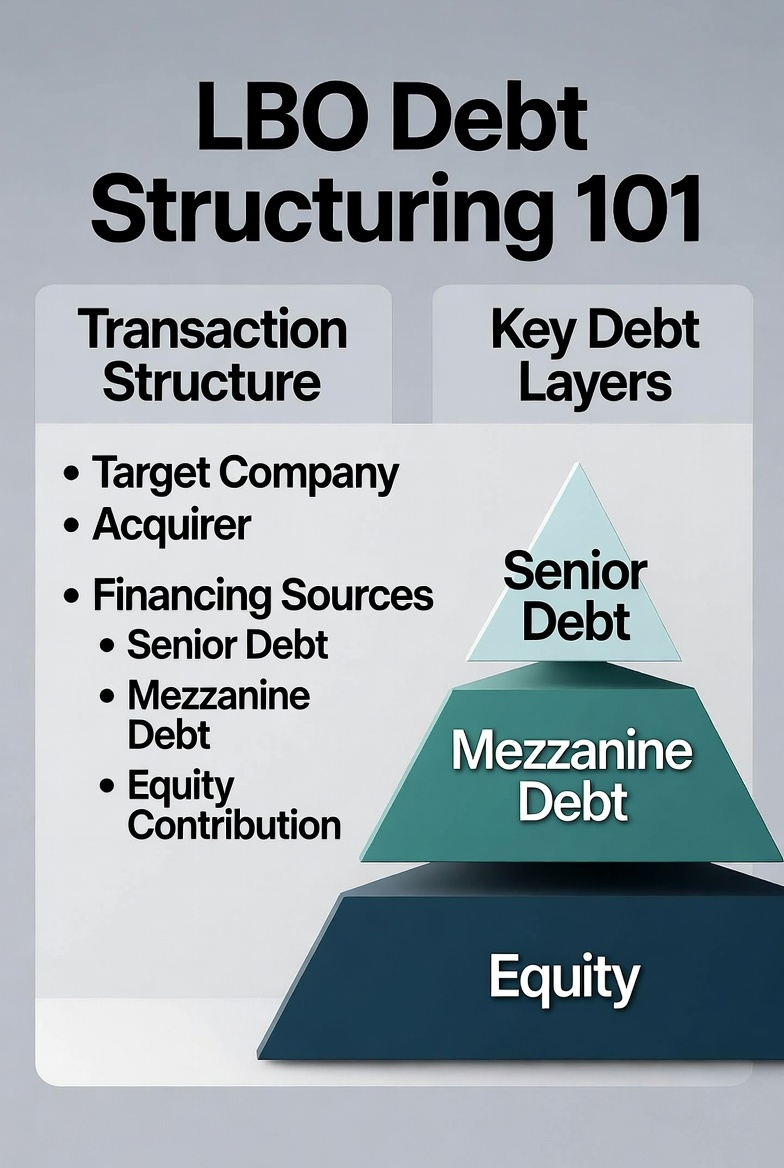
Capital structure mapping You build detailed pictures of every tranche: secured vs unsecured, guarantees, collateral packages, intercreditor relationships, maturity walls, and covenant tests. This is not academic; small structural details can determine who controls the outcome.
Scenario planning Out-of-court restructuring, exchange offers, amend-and-extend, distressed M&A, pre-packaged bankruptcy, Chapter 11 plans—each pathway implies different recoveries, timelines, and risks.
Negotiation support Restructuring is a multiplayer game. Management, owners, lenders, bondholders, suppliers, and sometimes governments or regulators may all have leverage. Banking teams help clients prepare arguments, quantify trade-offs, and sequence talks.
Distressed M&A and asset sales When value is preserved by selling divisions or the whole company, the process resembles M&A—but with shorter timelines, scarcer financing, greater uncertainty, and often a court or creditor committee watching closely.
Chapter 11 literacy Even if you are not a lawyer, you will learn the economic logic of bankruptcy: DIP financing, adequate protection, automatic stay dynamics, plan confirmation concepts, and how claims get classified. You are not replacing counsel; you are making the finance legible inside a legal framework.
If you enjoy problems where the “right answer” depends on who can block whom, you will find this work intellectually rewarding.
How this differs from classic groups (and from Sales & Trading)
Versus M&A / coverage Classic M&A often optimizes for strategic buyers and long-term synergy narratives. Restructuring optimizes for survival, recovery, and enforceable rights when stakeholders disagree and time is short.
Versus Leveraged Finance LevFin in a hot market is often about distributing new paper. Restructuring is frequently about existing paper—what it permits, what it forbids, and what happens when the issuer cannot comply.
Versus Sales & Trading A distressed desk in S&T prices risk and provides liquidity; it lives in markets, positioning, and flow. Restructuring advisory lives in mandates, processes, and stakeholder negotiation. There is intellectual overlap—both sides care about recovery values and catalysts—but the daily rhythm is different: fewer “markets open” pressures, more late nights driven by deadlines tied to covenant breaches, court dates, and creditor meetings.
That said, if you want a career touching special situations, understanding both the advisory angle and the trading angle can be powerful: one teaches you the corporate machinery; the other teaches you how the world prices fear.
Skills that matter (and what you should be honest about)
Restructuring rewards a specific toolkit:
Patience with complexity You will read indentures, credit agreements, and presentation decks that feel like puzzles.
Communication under uncertainty Clients and counterparties are stressed. Clarity is a product.
Quant + legal intuition You do not need a law degree, but you must learn to speak carefully and to respect boundaries between banking advice and legal advice.
Emotional stamina The timelines can be brutal—not because a league table ranking is on the line, but because a company’s survival window is real.
If you dislike ambiguity, this may not be your favorite group. If you dislike repetitive processes, you may also struggle: restructuring has recurring rhythms tied to negotiations and documentation.
Recruiting, exits, and career realism
Restructuring is often considered niche but high-signal. Exits vary: distressed private equity, credit funds, special situations investing, turnaround consulting, and sometimes law school for those who want to formalize a restructuring career. Some people stay in banking because the work remains interesting and the expertise compounds.
For students, the recruiting story is usually: strong technical basics (accounting, credit, valuation) plus evidence you can handle messy, adversarial settings—debate, litigation-style reasoning, internships with real responsibility, or deep coursework in bankruptcy and fixed income.
Be careful with myths. Restructuring is not “easier M&A,” nor is it purely “dark arts.” It is a professional service for acute financial stress—high stakes, high scrutiny, and often high learning.
Bottom line
Restructuring / Special Situations is the investment banking specialty focused on stressed and distressed balance sheets, creditor dynamics, and the full range of solutions from out-of-court fixes to formal bankruptcy processes—often alongside distressed M&A and rescue financing. It demands a hybrid skill set: finance, legal literacy, negotiation, and the ability to operate when information is incomplete and emotions run hot.
For students and early-career professionals, the group is best understood not as a subgenre of pitch decks, but as advisory work where the constraints are binding and the stakeholders are real. If that sounds more interesting than frightening, you are already thinking like someone who might thrive there.




What is Restructuring/Special Situations Group?
If you picture investment banking as a parade of glossy pitchbooks and “strategic alternatives” for healthy companies, Restructuring (often paired with Special Situations) is the part of the bank that shows up when the math stops working. Companies miss covenants, liquidity tightens, creditors disagree, and someone has to design a path forward—whether that is a consensual fix, a sale under pressure, or a formal Chapter 11 process. That “someone” is frequently a Restructuring / Special Situations team inside an investment bank.
This article explains what the group does, how it differs from classic M&A and leveraged finance, what the day-to-day looks like, and why it attracts a particular kind of analyst or associate—especially if you like complexity, negotiation, and messy reality more than tidy templates.
What “restructuring” and “special situations” actually mean
Restructuring in banking usually means advising distressed or stressed companies and/or their creditors on how to repair a broken balance sheet and operating model. The work sits at the intersection of corporate finance, legal process, and power politics among stakeholders.
Special situations is a broader label. At some firms it is essentially the same desk as restructuring; at others it also covers event-driven or opportunistic financings and trades—situations where the opportunity exists because something unusual happened (a spin-off, a liquidity crunch, a misunderstood asset, a complicated liability stack). In practice, students should treat “RSSG / RX / Special Situations” as a family of teams that thrive when outcomes are uncertain and the path is non-standard.
Who hires the bank—and why that matters for your mental model
Unlike many coverage groups that pitch the CEO on a growth story, restructuring bankers are often retained when:
The company needs to avoid default, raise rescue capital, negotiate amendments, or run a sale process under distress constraints. Creditors (banks, bondholders, ad hoc groups) need advice on their rights, recovery prospects, and negotiation strategy. Sponsors are trying to protect equity value, inject new money, or orchestrate a “loan-to-own” outcome.
A subtle but important point for early-career readers: restructuring is not always “advising the debtor.” Banks navigate conflicts carefully, but the industry includes creditor-side mandates, fairness opinions, and roles tied to specific transactions. Your experience can differ materially depending on whether you are on a debtor advisory team, a creditor advisory team, or a product group that supports both under strict guardrails.
The work: less “model a merger,” more “map the constraints”
Restructuring mandates are unusually process-heavy and document-heavy. Typical workstreams include:
Liquidity and runway analysis You are constantly asking: how much cash is left, what can be delayed, what must be paid, and what triggers exist that could accelerate problems.
Capital structure mapping You build detailed pictures of every tranche: secured vs unsecured, guarantees, collateral packages, intercreditor relationships, maturity walls, and covenant tests. This is not academic; small structural details can determine who controls the outcome.
Scenario planning Out-of-court restructuring, exchange offers, amend-and-extend, distressed M&A, pre-packaged bankruptcy, Chapter 11 plans—each pathway implies different recoveries, timelines, and risks.
Negotiation support Restructuring is a multiplayer game. Management, owners, lenders, bondholders, suppliers, and sometimes governments or regulators may all have leverage. Banking teams help clients prepare arguments, quantify trade-offs, and sequence talks.
Distressed M&A and asset sales When value is preserved by selling divisions or the whole company, the process resembles M&A—but with shorter timelines, scarcer financing, greater uncertainty, and often a court or creditor committee watching closely.
Chapter 11 literacy Even if you are not a lawyer, you will learn the economic logic of bankruptcy: DIP financing, adequate protection, automatic stay dynamics, plan confirmation concepts, and how claims get classified. You are not replacing counsel; you are making the finance legible inside a legal framework.
If you enjoy problems where the “right answer” depends on who can block whom, you will find this work intellectually rewarding.
How this differs from classic groups (and from Sales & Trading)
Versus M&A / coverage Classic M&A often optimizes for strategic buyers and long-term synergy narratives. Restructuring optimizes for survival, recovery, and enforceable rights when stakeholders disagree and time is short.
Versus Leveraged Finance LevFin in a hot market is often about distributing new paper. Restructuring is frequently about existing paper—what it permits, what it forbids, and what happens when the issuer cannot comply.
Versus Sales & Trading A distressed desk in S&T prices risk and provides liquidity; it lives in markets, positioning, and flow. Restructuring advisory lives in mandates, processes, and stakeholder negotiation. There is intellectual overlap—both sides care about recovery values and catalysts—but the daily rhythm is different: fewer “markets open” pressures, more late nights driven by deadlines tied to covenant breaches, court dates, and creditor meetings.
That said, if you want a career touching special situations, understanding both the advisory angle and the trading angle can be powerful: one teaches you the corporate machinery; the other teaches you how the world prices fear.
Skills that matter (and what you should be honest about)
Restructuring rewards a specific toolkit:
Patience with complexity You will read indentures, credit agreements, and presentation decks that feel like puzzles.
Communication under uncertainty Clients and counterparties are stressed. Clarity is a product.
Quant + legal intuition You do not need a law degree, but you must learn to speak carefully and to respect boundaries between banking advice and legal advice.
Emotional stamina The timelines can be brutal—not because a league table ranking is on the line, but because a company’s survival window is real.
If you dislike ambiguity, this may not be your favorite group. If you dislike repetitive processes, you may also struggle: restructuring has recurring rhythms tied to negotiations and documentation.
Recruiting, exits, and career realism
Restructuring is often considered niche but high-signal. Exits vary: distressed private equity, credit funds, special situations investing, turnaround consulting, and sometimes law school for those who want to formalize a restructuring career. Some people stay in banking because the work remains interesting and the expertise compounds.
For students, the recruiting story is usually: strong technical basics (accounting, credit, valuation) plus evidence you can handle messy, adversarial settings—debate, litigation-style reasoning, internships with real responsibility, or deep coursework in bankruptcy and fixed income.
Be careful with myths. Restructuring is not “easier M&A,” nor is it purely “dark arts.” It is a professional service for acute financial stress—high stakes, high scrutiny, and often high learning.
Bottom line
Restructuring / Special Situations is the investment banking specialty focused on stressed and distressed balance sheets, creditor dynamics, and the full range of solutions from out-of-court fixes to formal bankruptcy processes—often alongside distressed M&A and rescue financing. It demands a hybrid skill set: finance, legal literacy, negotiation, and the ability to operate when information is incomplete and emotions run hot.
For students and early-career professionals, the group is best understood not as a subgenre of pitch decks, but as advisory work where the constraints are binding and the stakeholders are real. If that sounds more interesting than frightening, you are already thinking like someone who might thrive there.