
Industry Group under Lens: TMT

In the fast-evolving landscape of 2026, the Technology, Media, and Telecommunications (TMT) sector stands as a colossus, driving economic growth while facing unprecedented scrutiny. Valued at trillions and comprising over 50% of the S&P 500's market capitalization, TMT isn't just an industry—it's the backbone of modern society. From AI-powered innovations to global connectivity, this sector influences everything from daily communications to geopolitical strategies. Yet, with great power comes intense examination: regulators worldwide are tightening reins on data privacy, antitrust issues, and ethical AI use, while economic pressures like inflation and tariffs add layers of complexity. This article delves into the TMT sector under the lens, exploring its subsectors, challenges, opportunities, and future trajectory as of February 2026.
The Technology Subsector: AI at the Forefront Technology remains the powerhouse of TMT, with artificial intelligence (AI) transitioning from hype to practical integration. In 2026, the focus shifts to "agentic AI," where autonomous systems handle complex tasks across industries, potentially growing the market to $8.5 billion. Companies are embedding AI into existing tools, like search engines overtaking standalone generative AI platforms, emphasizing scalability over splashy breakthroughs. Data emerges as the new gold, with firms prioritizing integration and execution to harness AI's full potential.
However, scrutiny intensifies around AI's ethical implications. Intellectual property disputes over AI-generated content are rampant, prompting legal reforms in contracts and IP rights. Cybersecurity threats loom larger, as AI amplifies risks in data breaches and deepfakes. Geopolitical tensions, including supply chain sovereignty, force tech giants to navigate fragmented regulations, from the EU's AI Act to U.S. export controls on semiconductors. Amid this, sustainability gains traction; tech firms invest in green data centers to counter AI's massive energy demands, aligning with global net-zero goals.
The Media Subsector: Convergence and Content Wars Media in 2026 is a battleground of convergence, where traditional boundaries blur with tech and telecom. Streaming saturation and declining ad revenues push companies toward portfolio reshaping and operational agility. Live events evolve with immersive tech, incorporating AI-powered content and interactive zones to boost engagement. Video gaming enters a new era, with platforms colliding to spark growth, projected to hit new highs through cross-ecosystem integrations.
Under the lens, media faces antitrust scrutiny, especially in mergers that consolidate power among tech-media hybrids. Privacy concerns escalate with personalized content algorithms, drawing regulatory fire for data misuse. Misinformation amplified by AI tools challenges trust, leading to calls for stricter content moderation. Yet, opportunities abound: AI enhances content creation, from automated scripting to virtual production, reducing costs and expanding reach in emerging markets.
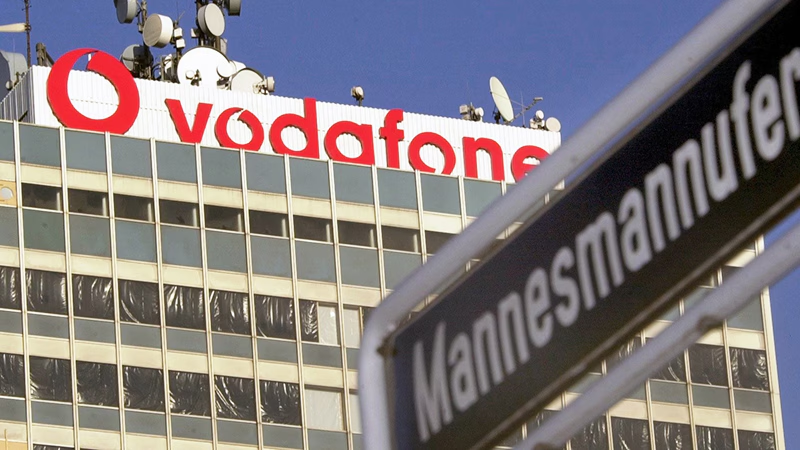
The Telecommunications Subsector: Towards 6G and Beyond Telecommunications anchors TMT with infrastructure enabling the digital age. In 2026, telcos pivot to AI-driven networks, using agents for predictive maintenance and optimization. The road to 6G accelerates, promising ultra-low latency for applications like autonomous vehicles and metaverses. Quantum networks emerge, offering unbreakable encryption, while sustainable infrastructure—think eco-friendly base stations—addresses environmental critiques. Direct-to-device (D2D) services proliferate, extending connectivity via satellites to remote areas.
Scrutiny here centers on network performance and geopolitics. Telcos grapple with evolving risks, including cyber threats and supply chain vulnerabilities amid U.S.-China tensions. Regulatory reforms in Australia and elsewhere target digital infrastructure, imposing stricter rules on data centers and blockchain assets. Customer needs shift toward seamless, secure connectivity, pressuring operators to reinvent or risk obsolescence. M&A surges, focusing on AI infrastructure and portfolio efficiency to meet these demands.
Cross-Sector Challenges and Opportunities Across TMT, common threads of scrutiny include regulatory convergence and geopolitical risks. Antitrust bodies eye large deals, demanding proactive engagement. AI's integration raises governance issues, with expectations for accountability in ethics and bias mitigation. Economic factors like tariffs complicate global operations, yet they spur localization and innovation.
Opportunities shine through: TMT's growth trajectory positions it to dominate economies, with AI fueling cross-industry transformations. Platformization and outcome-based pricing redefine business models, fostering integrated ecosystems. In the UK, TMT drives sustainable digital economies, with 62% of large corporates adopting AI. Emerging tech like blockchain enhances telecom security, while media leverages AI for personalized experiences.
Future Outlook: Reinvention in the AI Era Looking ahead, TMT enters a phase of bold reinvention. Deal-making accelerates, targeting AI, digital platforms, and pure-play assets. The sector's convergence—tech eating media, telecom enabling all—could see TMT eclipse other industries in value. However, success hinges on navigating risks: from quantum threats to regulatory flux. Firms that prioritize data ethics, sustainability, and agile strategies will thrive.
In conclusion, TMT in 2026 is under a magnifying glass, scrutinized for its societal impact yet celebrated for its innovations. As AI matures and networks evolve, the sector's ability to balance growth with responsibility will define its legacy. For stakeholders, from investors to regulators, staying vigilant is key in this dynamic arena.




Industry Group under Lens: TMT
In the fast-evolving landscape of 2026, the Technology, Media, and Telecommunications (TMT) sector stands as a colossus, driving economic growth while facing unprecedented scrutiny. Valued at trillions and comprising over 50% of the S&P 500's market capitalization, TMT isn't just an industry—it's the backbone of modern society. From AI-powered innovations to global connectivity, this sector influences everything from daily communications to geopolitical strategies. Yet, with great power comes intense examination: regulators worldwide are tightening reins on data privacy, antitrust issues, and ethical AI use, while economic pressures like inflation and tariffs add layers of complexity. This article delves into the TMT sector under the lens, exploring its subsectors, challenges, opportunities, and future trajectory as of February 2026.
The Technology Subsector: AI at the Forefront Technology remains the powerhouse of TMT, with artificial intelligence (AI) transitioning from hype to practical integration. In 2026, the focus shifts to "agentic AI," where autonomous systems handle complex tasks across industries, potentially growing the market to $8.5 billion. Companies are embedding AI into existing tools, like search engines overtaking standalone generative AI platforms, emphasizing scalability over splashy breakthroughs. Data emerges as the new gold, with firms prioritizing integration and execution to harness AI's full potential.
However, scrutiny intensifies around AI's ethical implications. Intellectual property disputes over AI-generated content are rampant, prompting legal reforms in contracts and IP rights. Cybersecurity threats loom larger, as AI amplifies risks in data breaches and deepfakes. Geopolitical tensions, including supply chain sovereignty, force tech giants to navigate fragmented regulations, from the EU's AI Act to U.S. export controls on semiconductors. Amid this, sustainability gains traction; tech firms invest in green data centers to counter AI's massive energy demands, aligning with global net-zero goals.
The Media Subsector: Convergence and Content Wars Media in 2026 is a battleground of convergence, where traditional boundaries blur with tech and telecom. Streaming saturation and declining ad revenues push companies toward portfolio reshaping and operational agility. Live events evolve with immersive tech, incorporating AI-powered content and interactive zones to boost engagement. Video gaming enters a new era, with platforms colliding to spark growth, projected to hit new highs through cross-ecosystem integrations.
Under the lens, media faces antitrust scrutiny, especially in mergers that consolidate power among tech-media hybrids. Privacy concerns escalate with personalized content algorithms, drawing regulatory fire for data misuse. Misinformation amplified by AI tools challenges trust, leading to calls for stricter content moderation. Yet, opportunities abound: AI enhances content creation, from automated scripting to virtual production, reducing costs and expanding reach in emerging markets.
The Telecommunications Subsector: Towards 6G and Beyond Telecommunications anchors TMT with infrastructure enabling the digital age. In 2026, telcos pivot to AI-driven networks, using agents for predictive maintenance and optimization. The road to 6G accelerates, promising ultra-low latency for applications like autonomous vehicles and metaverses. Quantum networks emerge, offering unbreakable encryption, while sustainable infrastructure—think eco-friendly base stations—addresses environmental critiques. Direct-to-device (D2D) services proliferate, extending connectivity via satellites to remote areas.
Scrutiny here centers on network performance and geopolitics. Telcos grapple with evolving risks, including cyber threats and supply chain vulnerabilities amid U.S.-China tensions. Regulatory reforms in Australia and elsewhere target digital infrastructure, imposing stricter rules on data centers and blockchain assets. Customer needs shift toward seamless, secure connectivity, pressuring operators to reinvent or risk obsolescence. M&A surges, focusing on AI infrastructure and portfolio efficiency to meet these demands.
Cross-Sector Challenges and Opportunities Across TMT, common threads of scrutiny include regulatory convergence and geopolitical risks. Antitrust bodies eye large deals, demanding proactive engagement. AI's integration raises governance issues, with expectations for accountability in ethics and bias mitigation. Economic factors like tariffs complicate global operations, yet they spur localization and innovation.
Opportunities shine through: TMT's growth trajectory positions it to dominate economies, with AI fueling cross-industry transformations. Platformization and outcome-based pricing redefine business models, fostering integrated ecosystems. In the UK, TMT drives sustainable digital economies, with 62% of large corporates adopting AI. Emerging tech like blockchain enhances telecom security, while media leverages AI for personalized experiences.
Future Outlook: Reinvention in the AI Era Looking ahead, TMT enters a phase of bold reinvention. Deal-making accelerates, targeting AI, digital platforms, and pure-play assets. The sector's convergence—tech eating media, telecom enabling all—could see TMT eclipse other industries in value. However, success hinges on navigating risks: from quantum threats to regulatory flux. Firms that prioritize data ethics, sustainability, and agile strategies will thrive.
In conclusion, TMT in 2026 is under a magnifying glass, scrutinized for its societal impact yet celebrated for its innovations. As AI matures and networks evolve, the sector's ability to balance growth with responsibility will define its legacy. For stakeholders, from investors to regulators, staying vigilant is key in this dynamic arena.